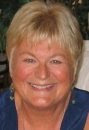
Today I'm going to do something a little different on my blog. Last week my first cousin twice removed, Tara Fouts, who is a college student in California, asked if she could interview me for her blog. Of course I said
yes. After all, Tara is family! Her father is my first cousin Meta's son. And cousin Meta is so dear to my heart that I call her my sister-cousin. Anyway, Tara's questions were so thoughtful that I not only answered all ten, I blathered on and on for 2200 words. Poor Tara. Well, anyway, here it is, questions and answers as only a self-indulgent writer can muster.
1. First, and most important, tell us a little bit about yourself! How did you start writing, what do you write, etc.
I started writing in 1980, a dozen years after I graduated from college with a B.A. degree in English. That English degree didn't teach me a thing about how to be a writer. But it did teach me to appreciate good writing. Over the years I've learned that writing cannot be taught. It can only be learned. And you learn by writing, writing, writing, writing, writing, writing, writing. And then you do five more drafts. And then you submit and get rejection after rejection after rejection after rejection.
I started writing, like 80% of all writers do, because of the death of someone I loved. In the industry these pieces are known as "Dead Grandma" stories and most of them end up in the round file in publishers' offices. Nobody cares about your dead grandma but people write these things because they need a catharsis after the death of the person they loved so much. In my case my mother died in 1979 of ALS at age 57. She was my best friend and for the first time since I was 17 years old I was living in my hometown and had the time to nourish a real friendship with my mother. As a newly-divorced single parent of three small children, I shared many cups of tea with her in the mornings before we each went to work. When she died four years later, after I'd remarried and was pregnant with my fourth child, I was devastated and wrote my first true story, The Baggy Yellow Shirt. Google it. It's been stolen by hundreds of bloggers over the years. My "dead grandma" story has been read world-wide by over 100 million people in numerous publications, including Reader's Digest and all 15 of its foreign editions. I just completed a long non-fiction piece titled The Journey of the Baggy Yellow Shirt that is going to be published this year in an anthology for writers.
You asked, "What do you write?" I write non-fiction. Stories, columns, essays, books.
2. Why did you choose to write in the non-fiction genre?
Laziness. There's very little difference between fiction and non-fiction if you're writing stories. True stories and made up stories all contain the same seven essential ingredients: contract with the reader, verisimilitude, conflict, scene, dialog, agent for change and a take-away. Since most fiction is based on true life anyway, and since my life was filled with conflict and change...all I did was write true stories about things I experienced firsthand or true stuff from people I interviewed. Fiction requires more thought and an amazingly well-developed imagination. Again, as a busy single parent raising four children, I honestly didn't have enough time to sit and ponder my bellybutton let alone try to come up with fiction plots, conflicts and characters. I had enough of that in my own life. And that is exactly why anyone under 40 has a tough time being a non-fiction writer. They simply don't have enough life under their belts yet.
3. What do you feel is the hardest part in writing non-fiction? Do you feel it is easier than writing in the fiction genre?
I doubt if there's any difference in the degree of difficulty between fiction and non-fiction when it comes to the actual writing.
Both are difficult. Both require what Stephen King shares in his splendid book ON WRITING (my favorite writing how-to). He says to be a good writer you just need four things: A room, a door, determination to shut the door and a concrete goal. Period. Nobody else could ever come up with a better answer than that. For most writers the concrete goal is the most difficult. For me it's what makes writing easy. When you set a goal each day and stick to it, you eventually end up with a book. How do you eat an elephant? One bite at a time. So I set a goal each day. That's why I love to write 365-day books. I've written five of them.
A HUG A DAY FOR SINGLE PARENTS 365-Down-to-Earth Daily Devotions. (Servant Publications)
CHICKEN SOUP FOR THE DIETER'S SOUL DAILY INSPIRATIONS. (HCI)
DAILY DEVOTIONS FOR WRITERS (Infinity Publications)
POSITIVE QUOTES FOR EVERY DAY (Publications International Ltd) This will be published in August, 2010.
LEARNING TO LOVE YOUR STRUGGLES 365-Days of Grit, Gusto and Grace (Still trying to sell that one.)
When you divide your elephant into 365 pages, each its own entity, you can say, "I will write three of these 350-word stories or essays every day.” Stephen King writes 2000 words a day so we writers should easily be able to crank out 1000 words a day.
Sometimes I tell myself that I only have to put my butt in the chair for 15 minutes. But invariably, once I start writing, the cobwebs in my brain disappear and my fingers fly. It's getting your butt in the chair that's the hard part. For instance, I was coming up with excuses not to answer your questions. But the minute I started with question number one, my fingers flew until I'd written over 2200 words...probably 1500 more than you ever wanted.
4. Have you ever considered switching to the dark side? (aka, writing fiction?) Why, or why not?
Of course I'm insanely jealous of fiction writers. I would love to be one of them. But after writing seriously for 30 years and having been relatively successful with non-fiction I'm spoiled rotten. And now that my kids are grown and I've moved to the sunny south, it seems that the struggles in my life have diminished to the point where I don't have as much to write about. I know I could start a crazy novel about life as one of the oldest baby boomers on the planet. Or what it's like to live in Florida among all the wild, wacky, way-out oldsters who are determined to grab onto the last bit of their lives with gusto. I could write a fiction book about my weird love life. My 2nd husband left me for an older woman, married her the day of our divorce and then died two years later when the child we had together was nine years old. My next relationship was a man who was a relocated government witness, testifying against the NY mob at various trials. We were together for eight months and even started writing a book together about his life as a mobster-wanna-be. (He was only half-Italian.) I'm telling you, I was definitely standing in the wrong line when God passed out husband-hunting genes. My next relationship lasted two-and-a-half years. But he was a widow who loved marriage and he was ready to take the plunge again. I was not. So I found him the woman he did marry a few months later. Then in 2004, after living in Milwaukee, Wisconsin for 24 years and suffering six-month-winters, I moved to Florida, the land of my birth where I only lived for three weeks just after World War II ended. In Florida I met Jack, my hunka-hunka-burnin'-love who lives 57 steps from my condo. We've been together for six years and I think there is something to be said for couples in their 50's, 60s' or 70's living 57 steps from each other. Should I write a steamy piece of fiction about a woman who wiggles her way through life with various no-two-are-alike paramours or should this be a non-fiction book about this New Age phenomena?
FIFTY-SEVEN STEPS TO PARADISE Why Couples Should Not Live Together. Hmmmmm???
5. Do you think the non-fiction genre gets little attention in the writing world? Why or why not do you suppose that is?
Considering the fact that 80% of all books published are non-fiction, I'd say non-fiction gets lots more attention. Only about 5000 fiction books are published a year and that includes all childrens’ books. The numbers imply that more people are turned on by the here, the now, the real-life problem solving. We want answers and we want them now, in a nice easy-to-read book. We're all dying to know how we can be happier, better looking, more fit, kinder, thinner. We want to know how to have more fun, better travel experiences, better marriages, friendships, neighbors, co-workers, jobs, homes, lifestyles, romance etc. We are a nation of answer-seeking lunatics who unfortunately don't have time to sit and read Gone With the Wind anymore. Hence non-fiction books will always be easier to write and sell.
6. Tell us a little bit about your current published book, "Five things to make you happy, and money isn't one of them." Ah yes, my latest book, THE 5 THINGS WE NEED TO BE HAPPY And Money Isn't One of Them. I discovered years ago that I am a very happy person. I always thought it was because I grew up in a happy, two-parent home in a small Midwestern town in northern Illinois. But as I grew older and wiser, I learned that it was the struggles in my life that truly made me grow and become happy. You have to earn happy. My childhood gave me the backbone and grit to ride through the struggles, but the journey of surfing through the struggles is what helped me emerge as a better, smarter, more compassionate, wiser, more interesting person. Then I started to analyze exactly what we need to be happy and I discovered there are only five simple ingredients. The answers are in the book. Here comes the shameless plug. This book can be ordered directly from me for $16 including postage. Send checks to Patricia Lorenz, 10351 Regal Drive #20, Largo, FL 33774. If you want it autographed let me know if you want a note written to a specific person.
See what shameless hussies we writers have to be? We write. We sell books. We need food, clothing and shelter. Send me money. You will receive a lovely book containing the answers to the question, "What are the 5 things?"
7. A lot of people might recognize your name from reading the ever popular Chicken Soup for the Soul Series. How did you get started writing for that series? What was your
favorite book you were a part of?
In 1995, a few months before The 2nd Helping of Chicken Soup for the Soul was to be released, I got a call from Jack Canfield asking if he could have permission to use my story, The Baggy Yellow Shirt in his second book. He'd seen it in Reader's Digest. I didn't have a clue who he was and had not even seen a copy of the first Chicken Soup book.
I said, "Sure, you can use it. How much are you going to pay me?"
He answered, "You want me to pay you?'' Seems he hadn't paid anyone for any of their stories in the first Chicken Soup book.
I said, "Of course I want you to pay me. Writing is how I make my living."
"How much?"
I pondered my life, my bills. "$250."
Then Jack proceeded to tell me that the first Chicken Soup book sold over one million copies. And he blathered on about how many millions of people world-wide he'd spoken to as a keynote self-esteem guru. At the end of our conversation I said, "Jack, I've changed my mind. I think I need $500 for reprint rights to my story."
He said, "Fine. I really want your story in my book."
Later Jack sent me a check for $500 and unbeknownst to him, the publisher also sent me a check for $500. I wrote a two-page, single-spaced letter detailing my life as a poor single parent of four and explained to both the publisher and to Jack just why I should be allowed to keep both checks. I never heard from either of them and I cashed those checks faster than rain rolls off a slanted roof. So, to answer your question, I suppose my first experience with Chicken Soup was my favorite. After all, that's the one that has my all-time-favorite story, The Baggy Yellow Shirt in it.
I used my power of persuasion and managed to get paid $2500 each for a number of my stories that appeared in Chicken Soup books after that for five or six years. Then, as the sales numbers dwindled, the mega-corporation put the clamp on their expenses and refused to pay any author more than $200 per story. At this writing I have over 65 stories in more than fifty of the Chicken Soup for the Soul books. Even though Jack Canfield and Mark Victor Hansen sold the empire to a couple from Connecticut a few years ago, that couple has no plans to stop production of Chicken Soup books for years to come. But the well of good money for writers has dried up.
8. Quick! Name five things you can't live without!
Hey, that would be giving away The 5 Things We Need to be Happy and then nobody would buy my book! Well, OK, here are a few extras I need to be happy...or that I can't live without because I don't want to be here unless I'm happy.
Sunshine, water (for swimming), and enough experiences and struggles in life to write about.
9. Do you have any advice for avid writers who are trying to get published? What would be the most important thing to know? Writers write. They don't just talk about writing, major in writing, read about writing, subscribe to magazines about writing, tell their friends and family that they want to be writers. NO, writers write. Period. They write and write and write and write every day. Remember? A room, a door, determination to shut the door and a concrete goal. Writers write. And then they rewrite. They practice the three re's. Revise, rewrite, redo. And most importantly they submit their work to publishers. I believe that writing is meant to be shared. Why take your thoughts from brain to fingers to computer to print unless you're going to share your thoughts with the world? If you're not going to share you can keep your thoughts in your brain and go play ping-pong. Too many writers talk about being writers and they never write. If you're going to do the work of actual writing then you must do the work of getting it published. Submit, submit, submit. And never give up if you believe that a piece is good enough to be published. Never ever ever ever ever ever give up.
10. Who or what is your inspiration for writing?
Every day I'm inspired by different people, places, things, events, activities, encounters. The world inspires me to write. My life experiences inspire me to write. Writing for a real writer is like breathing air. We just do it because we must.